Safety Razor vs. Cartridge RazorWhich Suits Your Shave?
Double-edge safety razors and cartridge razors compared by blade count, learning curve, rinsing, refills and travel, plus dermatologist shaving basics.
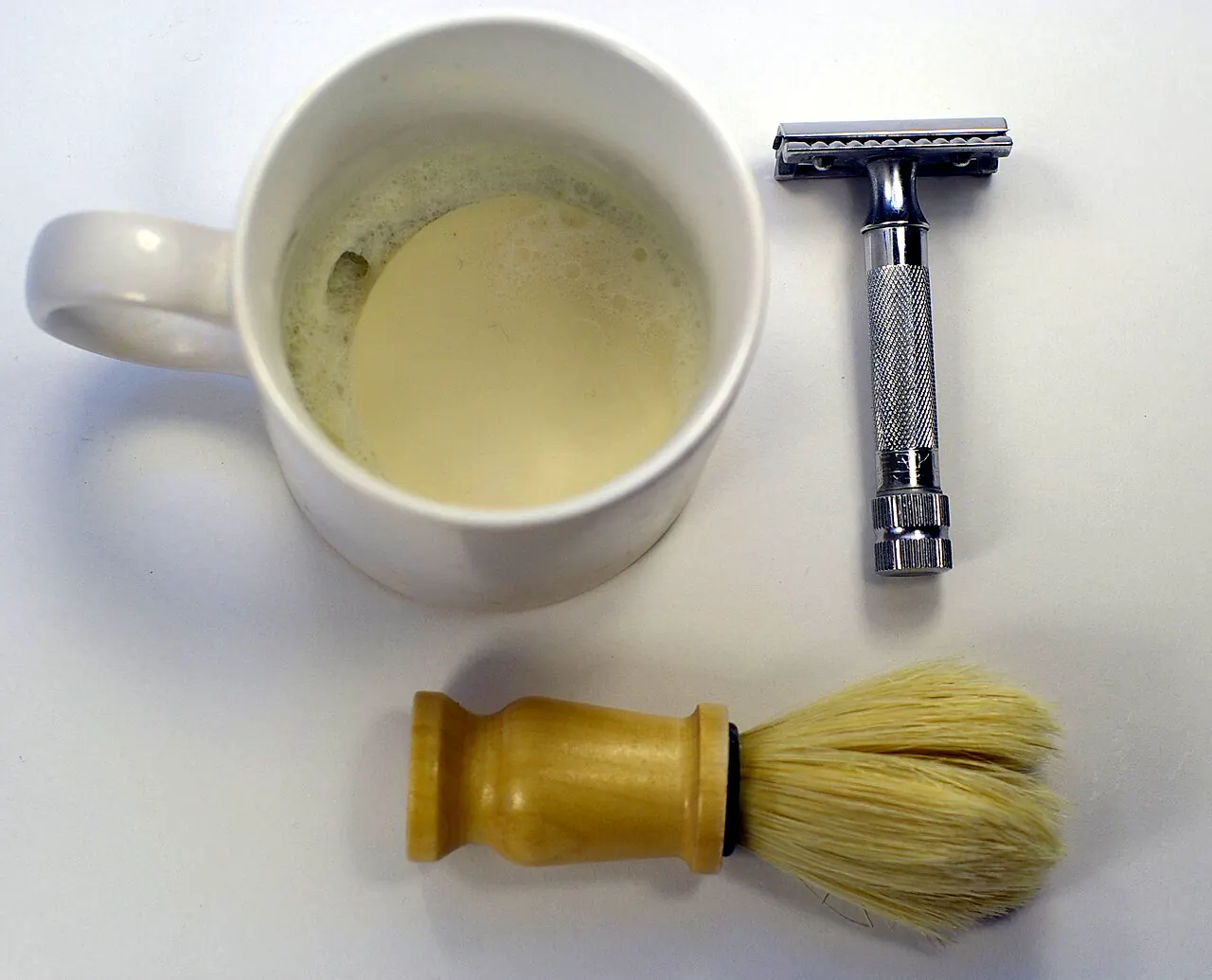
A cartridge razor is easier to learn: the pivoting head sets the angle for you. A double-edge safety razor uses one standard, widely sold blade and rinses clean easily, but you hold the angle yourself and it takes practice. Either way, a sharp blade matters most.
Written for: People who shave with a manual razor and are deciding between cartridges and a double-edge safety razor
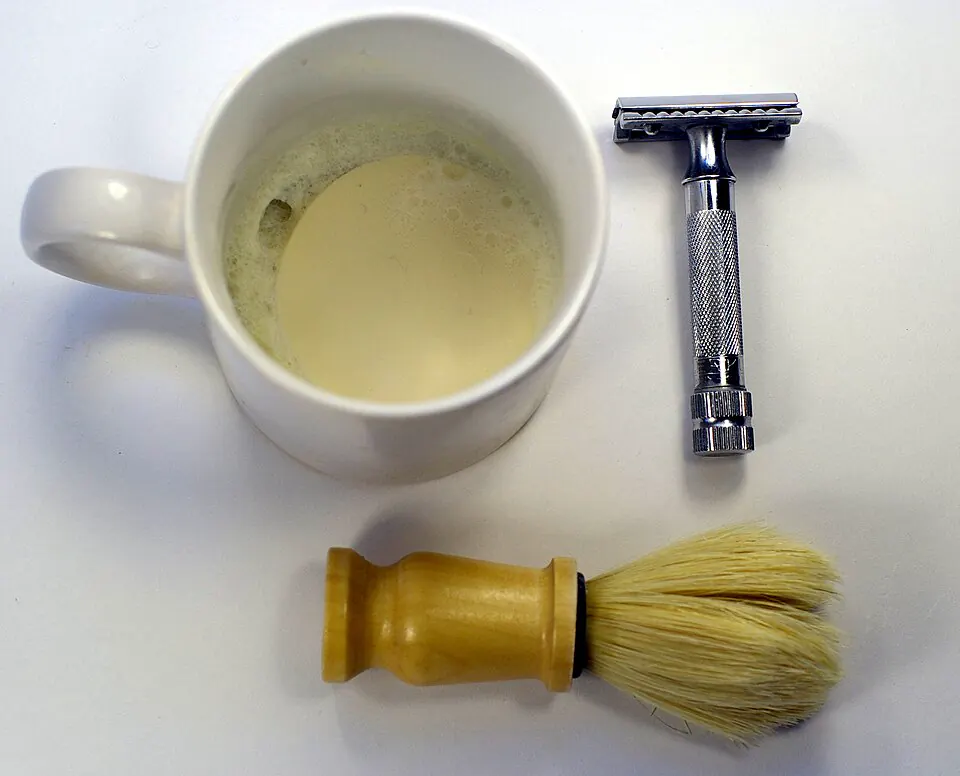
Manual razors fall into two main groups. Cartridge razors have a plastic head with several blades fixed in it, and you replace the whole head. Safety razors hold one flat double-edge blade between a base plate and a cap, and you replace only the blade. The cut is the same idea in both: a sharp edge drawn across wet, lathered hair.
How they differ
| Feature | Double-edge safety razor | Cartridge razor |
|---|---|---|
| Blades touching skin per stroke | One | Several, depending on the cartridge |
| Head | Fixed; you hold the angle | Pivots to follow the face |
| Pressure | Very light; the handle weight does the work | Light; the pivot and guard bar forgive more |
| Learning curve | Longer | Short |
| Rinsing | Open gap between blade and plate rinses quickly | Hair and lather can pack between close-set blades |
| Refills | Standard double-edge blades fit most safety razors | Cartridges fit only their own handle system |
| Tight spots (under the nose) | Head is wider; use the corner with care | Many have a single edging blade on the back |
| Air travel | Check the airline and security rules for loose blades | Usually simpler to carry |
Refills: what you keep buying
With either razor, the handle is bought once and the blades are bought for years. Cartridges are tied to one handle system, so check that refills for that handle are easy to find before you commit to it. Double-edge blades are a standard shape, but blades from different makers feel different on different faces. A sample pack with several kinds is a common way to find one that suits you before you buy a larger box.
When a cartridge razor makes sense
- You want a quick shave without thinking about blade angle.
- You shave curved areas such as knees, ankles or the head, where a pivoting head helps.
- You travel often with carry-on bags only.
- You are comfortable buying refills made for one handle system.
When a safety razor makes sense
- You want one blade on the skin per stroke. The American Academy of Dermatology notes that a single-blade razor or an electric razor is often recommended for people who get razor bumps.
- Cartridges clog on you. The open head of a safety razor rinses clean under the tap.
- You want refills that are a standard size and sold by many makers.
- You are willing to slow down and learn the angle.
What to compare when buying
Safety razors
- Closed comb (a straight safety bar) or open comb (teeth). Closed comb is the usual starting point.
- Fixed or adjustable blade gap. Adjustable models let you change how much blade is exposed; start at the mildest setting.
- How the head opens: three-piece, two-piece or twist-to-open. All hold the same blade.
- Handle length, weight and grip texture when wet.
Cartridge razors
- Which cartridges fit the handle and whether they are easy to find.
- Blade count and spacing. More blades in a small head leave less room to rinse.
- A pivoting head, a guard bar and a lubricating strip.
- An edging blade for sideburns and under the nose.
Shaving basics that apply to both
These steps follow the American Academy of Dermatology's shaving advice. They matter more than the razor type.
- Wet the skin and hair Shave during or right after a shower, when hair is soft and the skin is free of oil and dead skin that can clog the blade.
- Apply shaving cream or gel If your skin is dry or sensitive, look for a product labeled for sensitive skin.
- Shave in the direction the hair grows This is the main step dermatologists give for avoiding razor bumps and burns.
- Rinse after each swipe Clear the blade under running water so it keeps cutting cleanly.
- Store the razor dry Let it dry fully between shaves. Do not leave it in the shower or on a wet sink.
Questions people ask
Does a safety razor shave closer than a cartridge?
Not automatically. A sharp blade, soft wet hair and light pressure decide closeness with either razor. A safety razor gives you more control over angle once you have learned it.
Do more blades cause more irritation?
It varies by person. The American Academy of Dermatology says a single-blade razor or an electric razor is often recommended for people prone to razor bumps. If a multi-blade cartridge works for you, there is no need to switch.
Do all double-edge blades fit all safety razors?
Double-edge blades are a standard shape and fit most double-edge safety razors. Single-edge and injector razors use different blades, so check the listing.
Can I take a safety razor on a plane?
Rules for loose blades differ between carry-on and checked bags and between countries. Check your airline and airport security rules before you pack blades.
Sources
This guide is research-based: it draws on manuals, published specifications and safety guidance, not on hands-on testing.As an Amazon Associate we earn from qualifying purchases. Links to Amazon are paid links; they cost you nothing extra. Affiliate disclosure