Hair Straightener Plate SizesWhich Fits Your Routine?
Flat iron plate widths compared by hair length and goal: when to pick a narrow, 1-inch or wide straightener, plus plate length, floating plates and heat.
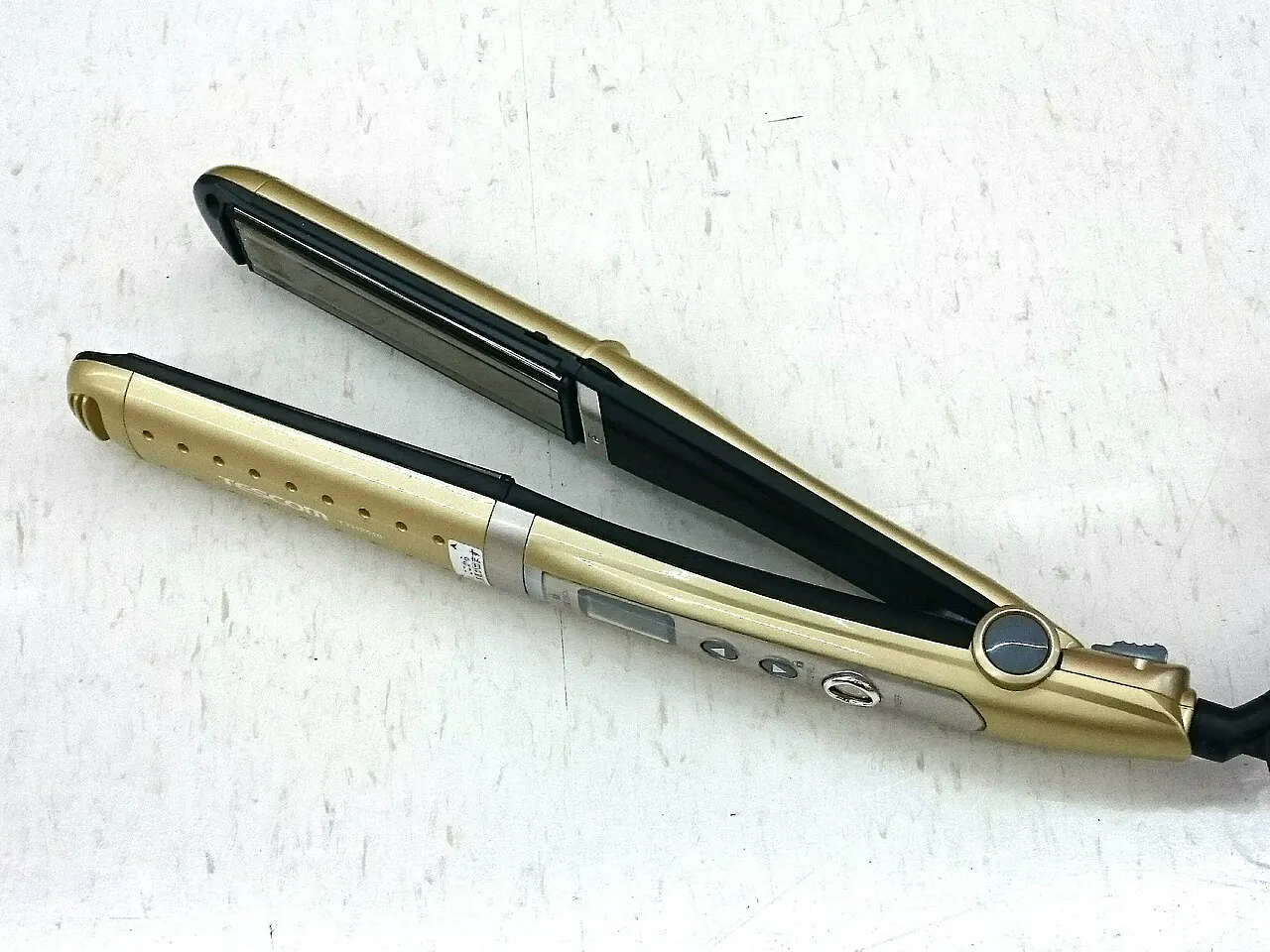
A 1-inch flat iron suits most people with short to shoulder-length hair and can also bend waves. Pick a narrower 1/2- to 3/4-inch iron for short hair, bangs and edges, and a wider 1.5- to 2-inch iron for long or thick hair.
Written for: People choosing a flat iron for their own hair length, thickness and style
Flat irons are sold by plate width, the distance across the plate. Width decides how much hair you can clamp per pass and how close to the root you can get. Plate length, heat control and whether the plates float matter too, but width is the first choice.
Plate widths at a glance
| Plate width | Hair length | Good for | Trade-off |
|---|---|---|---|
| 1/2 to 3/4 inch | Short, pixie, bangs, beard edges | Getting close to the root, short sections, edges | Slow on long or thick hair |
| 1 inch | Chin to shoulder, or longer fine hair | Everyday straightening, flipping ends, soft waves | More passes on very thick hair |
| 1.25 to 1.5 inch | Shoulder to mid-back | Faster straightening of medium to thick hair | Harder to curl with, less precise at the root |
| 1.75 to 2 inch | Long, thick or coarse hair | Wide sections, fewer passes | Heavy, awkward near the face and on short hair |
Short hair and bangs
Narrow plates let you clamp hair close to the scalp without the iron touching skin. They also handle cowlicks and bangs. If your hair is short and fine, a narrow iron with a low starting heat setting is usually enough.
Medium hair and curling with a flat iron
One inch is the common middle size. It straightens a section quickly and is narrow enough to twist for waves or curls. Irons with rounded outer edges make curling easier because the hair glides around the housing.
Long or thick hair
Wider plates hold bigger sections. That means fewer passes over the same hair, which many people prefer for heat exposure and time. Keep sections no wider than the plate and no thicker than the iron can clamp evenly.
Other things to compare
- Plate length: longer plates cover more hair per pass on long hair.
- Floating plates: plates on springs flex to keep even pressure on the section.
- Adjustable heat: look for clear steps or a display. Manuals often suggest lower settings for fine or chemically treated hair.
- Auto shutoff: turns the iron off after a set time unused.
- Swivel cord and a dual-voltage switch if you travel.
Using heat with care
Dermatologists advise limiting how often and how hot you use heat styling. Start at a lower setting, raise it only if hair does not hold the shape, and avoid repeated passes over the same section. Use flat irons on dry hair unless the manual says the iron is made for damp hair.
Questions people ask
Can a 1-inch flat iron work for long hair?
Yes. It takes more passes than a wider iron, but many people with long fine hair prefer the control.
Is a wider iron better for thick hair?
It is faster because it holds bigger sections. Keep sections thin enough that heat reaches through evenly.
What temperature should I use?
Start low and follow the manual for your hair type. Higher heat is not always needed to hold a style.
Do I need a heat protectant?
Many people use one. Product claims vary; follow the product directions and do not treat it as a guarantee against damage.
Sources
This guide is research-based: it draws on manuals, published specifications and safety guidance, not on hands-on testing. If we link to a retailer, we may earn a commission at no cost to you. Affiliate disclosure